

The fastest repeatable method is Call for Backup. It costs no Action Points, adds an assist to the selected operator’s next attack, and increases the Bond between the two units. Using it every squad turn turns a strong combat action into free relationship progress.
1. Bonds in Star Wars Zero Company
Bonds
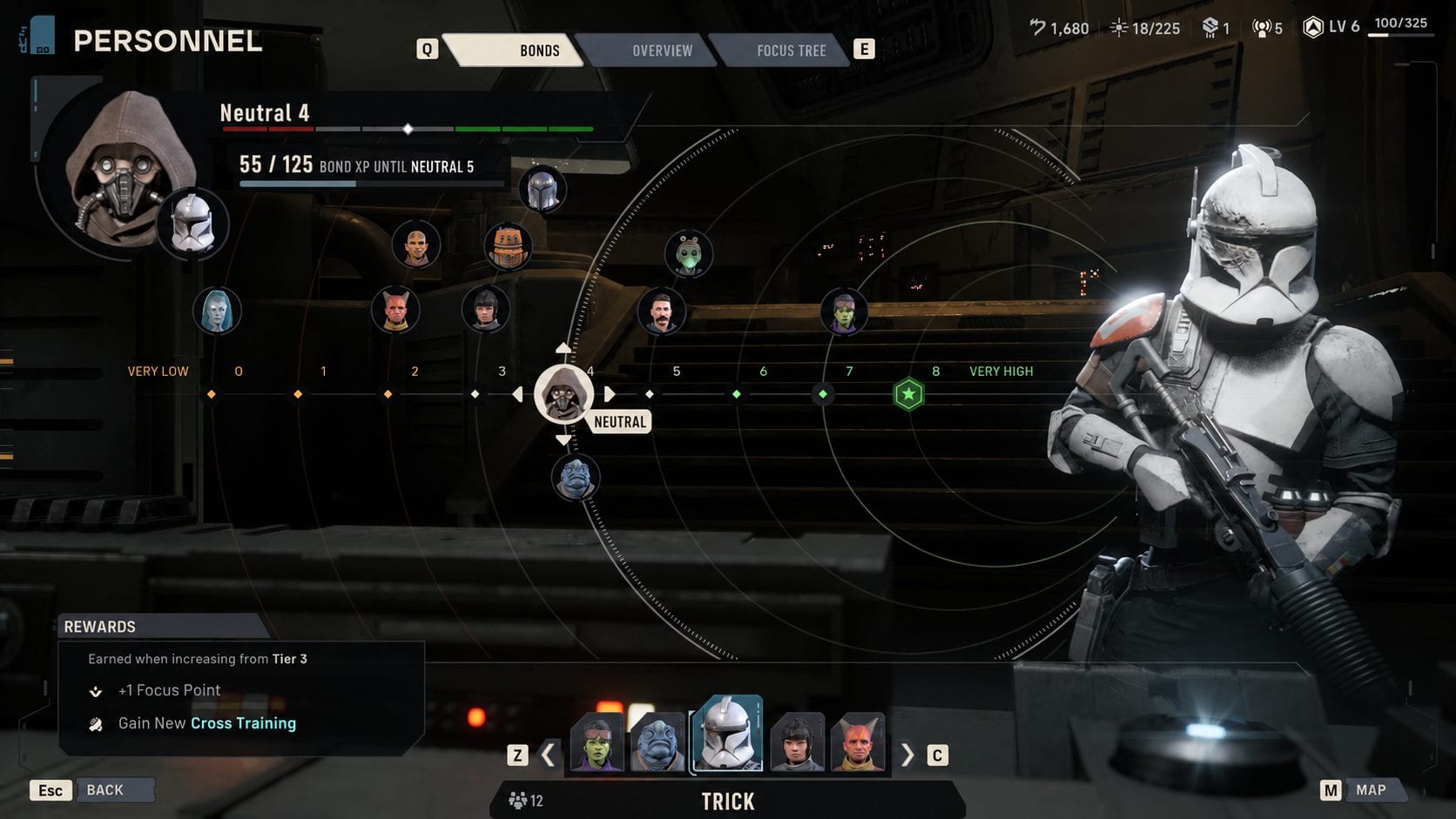
A Bond is a separate relationship meter between two operators. Every pair has its own progress, so raising Hawks and Trick does not improve Trick and Luco. The named levels are Low, Neutral, High, and Very High Bond.
Bond progress comes from shared combat and decisions across the campaign. The Personnel facility at the Den displays each pairing, its current relationship, available Cross Training, and each operator’s Focus Tree.
- Call for Backup: Select one teammate to assist the caller’s next attack.
- Shared missions: Deploy the same two operators on Tactical Missions.
- Healing: Use a Medic (or another heal action) on the other operator during combat. Bond gain is documented for healing a squadmate, not for taking extra damage on purpose.
- Operations: Assign the target pair together when the outcome increases their Bond.
- Den conversations: Speak to operators between deployments and complete their personal interactions.
- Dilemmas: Choose resolutions supported by the operators whose approval and Bond you want to protect.
Operations and Dilemmas can also reduce Bonds. Read every outcome and opinion before committing, especially when pushing a trophy pair toward Very High. Tactical Missions advance the campaign to the next Cycle, so finish relevant conversations and Operations before deploying.
2. Use Call for Backup to Raise Bonds Fast
Call for Backup
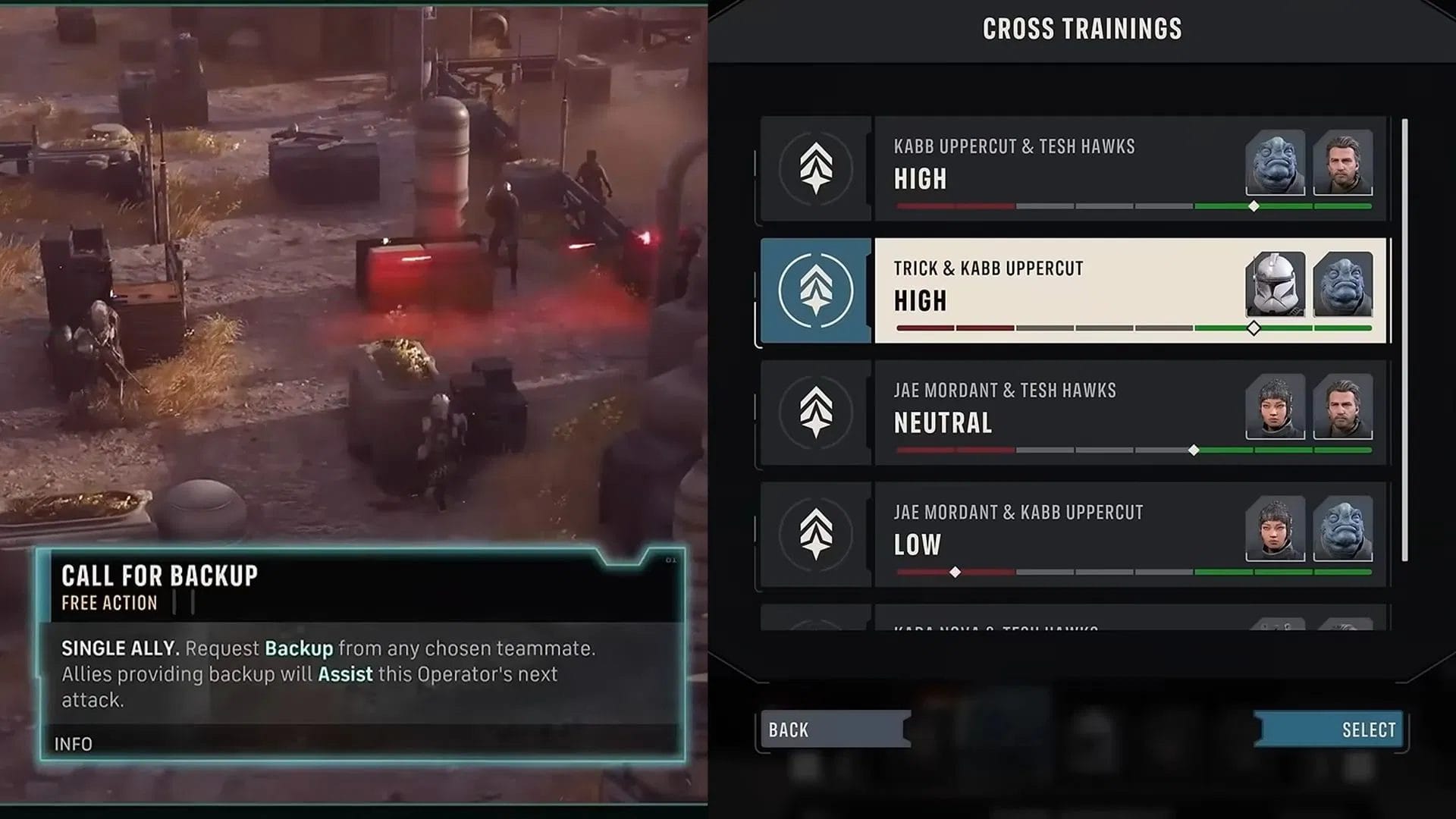
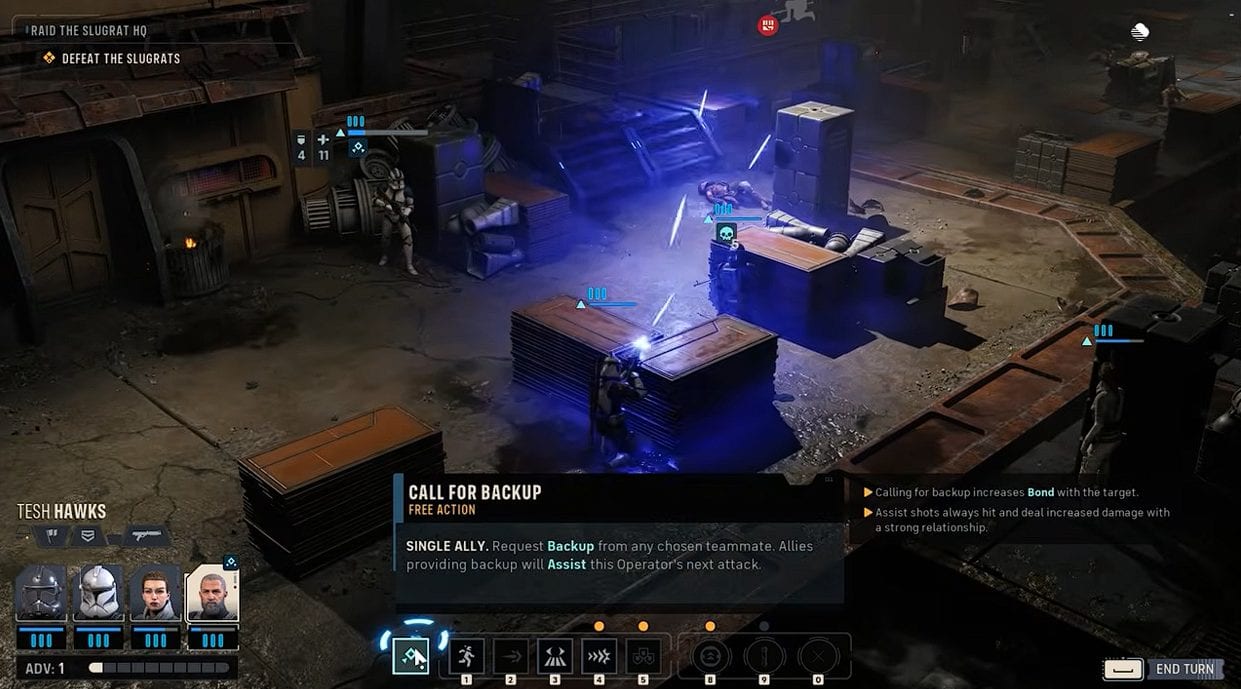
The Call for Backup is the fastest bond-building action because it costs no AP and is available once during each squad turn. One operator is randomly selected as the caller, but that operator can choose the teammate who provides the assist.
The assisting operator needs line of sight to the target. Use Backup in this order:
- Position the caller and assistant so that both have a line of sight to the same enemy.
- Select Call for Backup before spending the caller’s attack.
- Choose the operator whose Bond you want to raise.
- Fire at the shared target to trigger the assist and gain Bond progress.
Do not spend the caller’s attack until you check the Backup prompt. The action is easy to miss when a target is already exposed, and skipping one prompt every turn removes several free Bond gains across a long Tactical Mission.
Best Backup Pairing Setup
Using Call for Backup
Keep the two operators within sight of the same enemy group, but do not place them beside each other. A medium-range attacker paired with a long-range operator gives the Backup action more valid targets while protecting the pair from the same grenade or area attack.
Hawks is an efficient caller or assistant because Fearless Leader improves squad assists’ damage, defense, and chance to hit while Hawks is deployed. This also suits the six trophies that require Hawks to reach Very High Bond with each of their authored companions.
3. Fast Bond Farming Routine
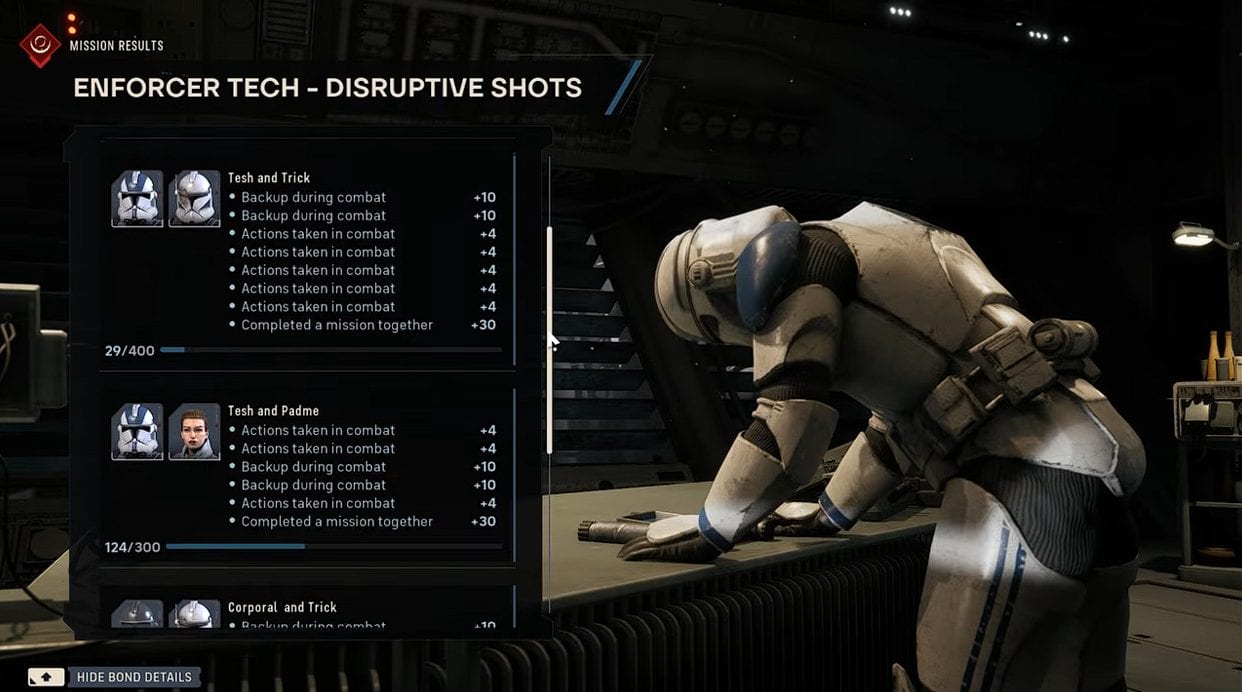
Bond Gains from Missions
The best farming route combines guaranteed deployment progress with every available free combat interaction. Focus on one target pair at a time instead of spreading progress across the full roster.
- Choose the pair before deploying. Select a trophy pairing or two core operators whose abilities work well together.
- Field both on every available mission. Shared Tactical Missions provide steady Bond progress and create more chances to use Backup.
- Check Call for Backup first. At the start of each squad turn, identify the random caller and, when possible, select the other member of the target pair.
- Create shared line of sight. Move the caller or assistant before firing so both can attack the same target.
- Use safe healing opportunities. Let the pair handle the necessary healing, but never deliberately take damage for Bond progress.
- Clear Den interactions. Speak to authored companions and complete time-limited Operations that support the target relationship before the next mission.
- Review the Bond at Personnel. Claim Cross Training as soon as the pair reaches a new level, then continue until it reaches Very High.
A four-operator squad can work on more than one relationship, but the random Backup caller makes divided farming less consistent. A fixed pair gives every eligible prompt a clear target and keeps both operators on the same progression curve.
4. Choose the Best Cross Training Reward
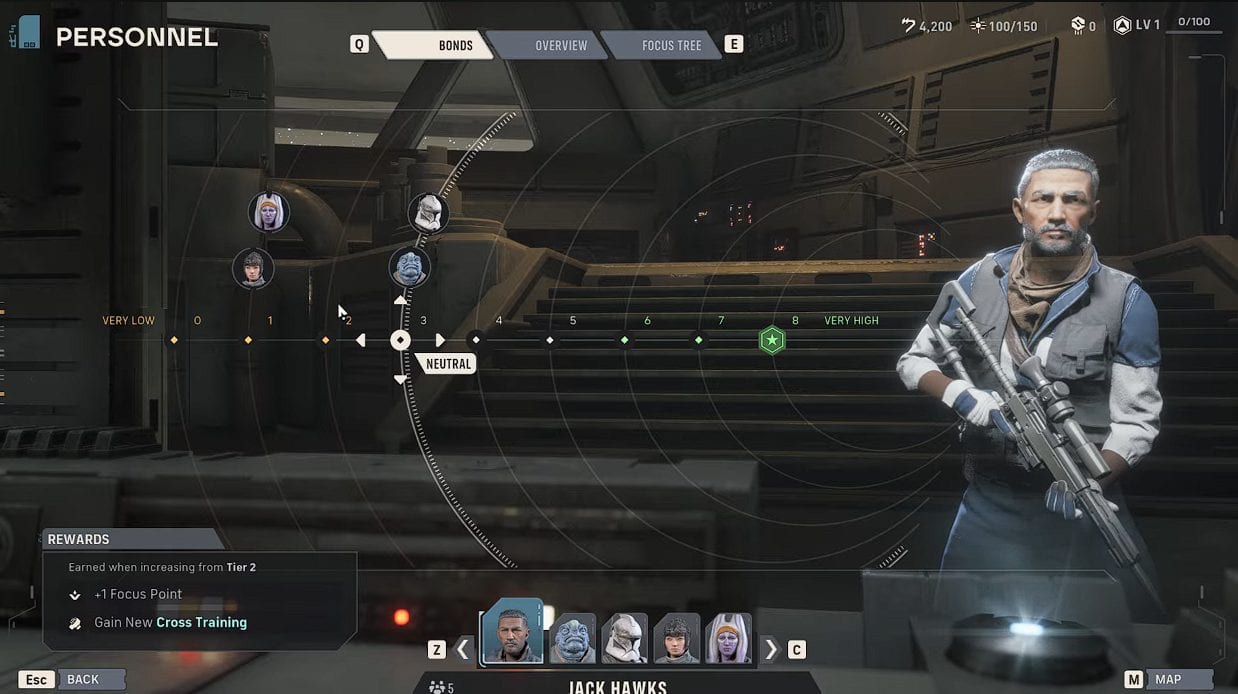
Hawks’s Bonds
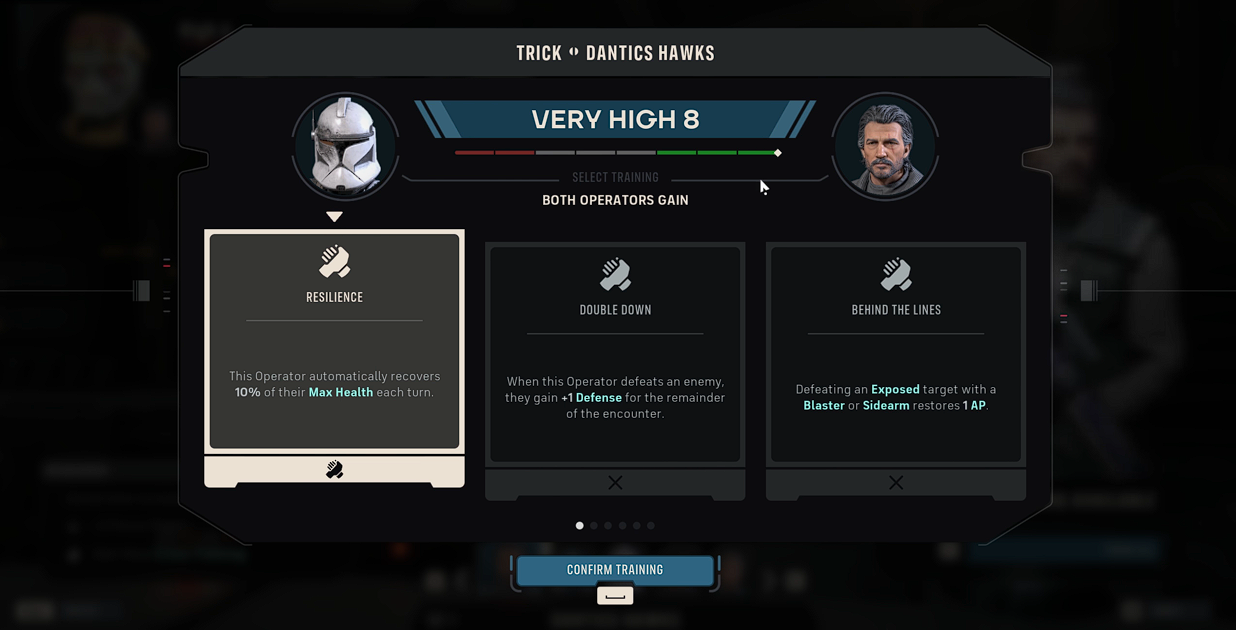
Each new Bond level unlocks Cross Training for both operators. The game presents three rewards, and the selected bonus applies permanently to both members of the pair. The offered choices vary between campaigns.
Use High Bond rewards as a decision check: take Focus for immediate upgrades, or choose a stat bonus when both operators’ builds gain clear value from it.
When to Take Freeform Training
Cross Training Rewards
Freeform Training gives 2 Focus Points to each operator, for a total of 4 points across the pair. Take it when both operators need immediate upgrades or when the other choices do not support either build.
This is the best early flexibility reward because Focus can be redistributed. It can push two defining abilities to their next ranks without waiting for another mission reward, and both characters receive the benefit at once.
When to Take a Permanent Stat
Choose a permanent stat bonus when it strengthens both builds. Timing Exercises has greater long-term value for two critical-hit attackers, while Reflex Fire Training belongs on a pair that regularly ends turns in Overwatch.
Cross Training choices cannot be changed after selection, while Focus distributions can be reset. Do not trade a rare bonus that perfectly fits both operators for Focus that can be earned through later Tactical Missions.
Maximum Bond Reward
Reaching the maximum Bond opens a special Cross Training that grants a Passive Ability. This is the strongest relationship reward and the main combat reason to finish one pairing before rotating the squad.
5. How to Earn and Spend Focus Points
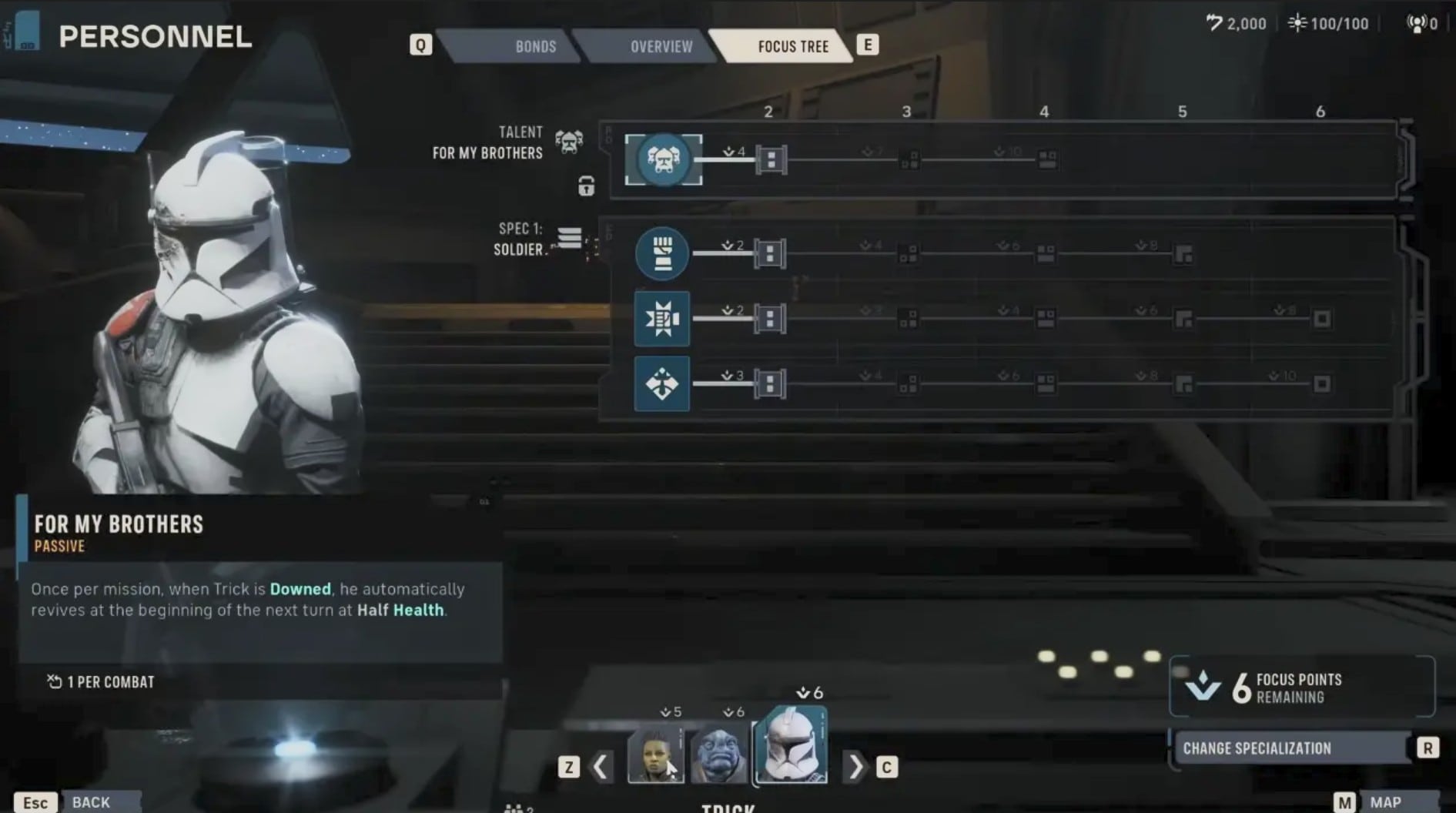
Focus Tree
Focus Points come primarily from raising Bonds. Tactical Missions, Operations, and the Freeform Training Cross Training option also award them. Spend Focus at the Personnel facility in an operator’s individual Focus Tree. Upgrades purchased for one character do not improve anyone else.
- Ultimate Ability: The class’s Advantage-powered signature action.
- Standard Ability: The class action used during regular turns.
- Class Passives: Effects that strengthen the operator without another command.
- Personal Talent: The authored or selected trait that separates the operator from others in the same class.
Damage Dealer Focus Priority
Upgrade the core damage Passive first when it affects every shot or attack in the operator’s normal turn. Follow with the Ultimate if it is the unit’s main burst tool, then improve the Standard Ability used for movement, setup, or finishing targets.
Stop at an efficient intermediate rank before forcing one ability to its maximum. Several upgraded tools create more value across different mission layouts than one maxed action and multiple untouched skills.
Support Focus Priority
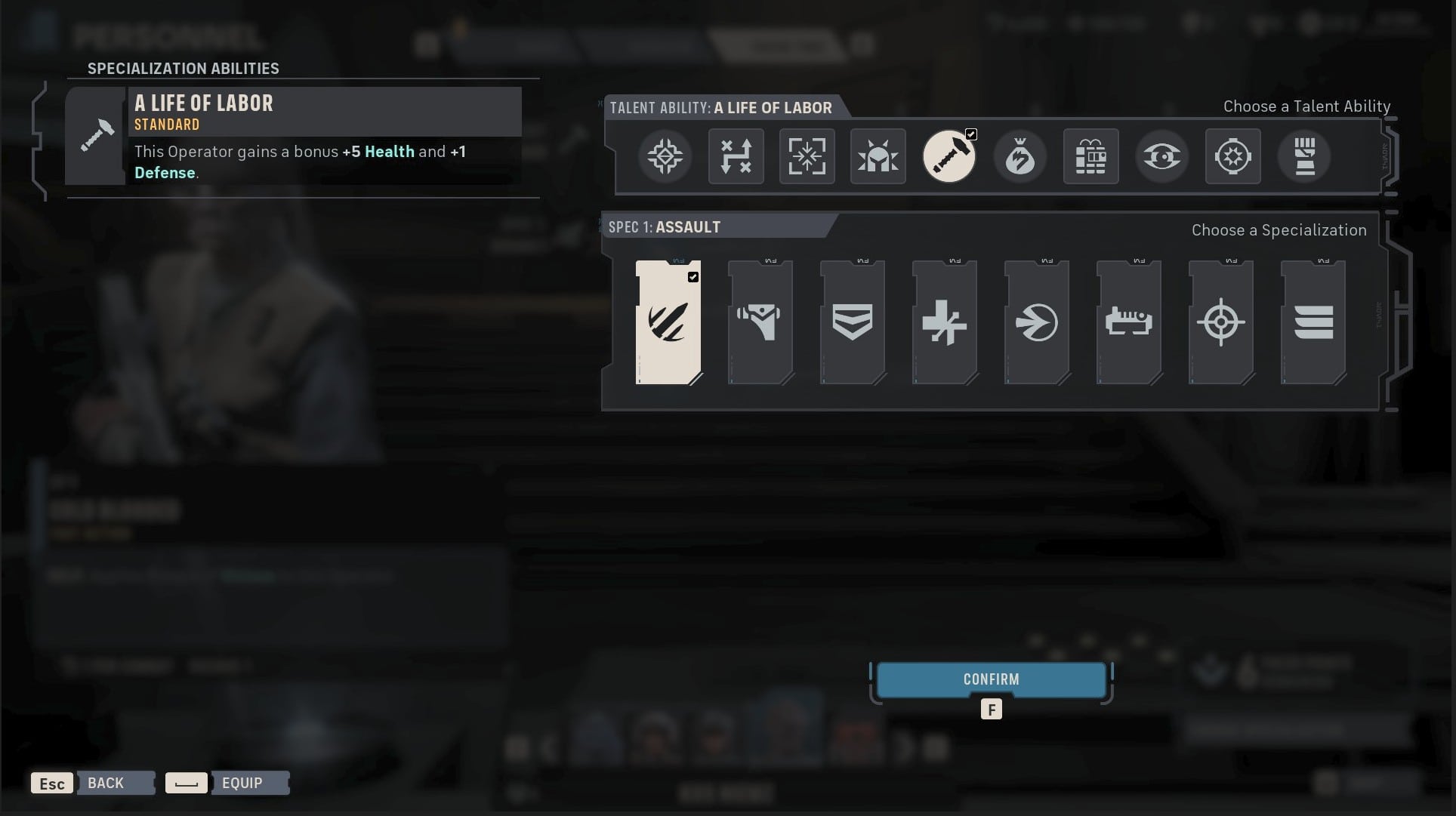
A Life of Labor Talent
Support operators get more value from their Standard Ability and team-facing Passive. Improve healing, buff duration, targeting range, area, or resource generation before spending heavily on an Ultimate that is used once in a fight.
For Scouts and other setup classes, prioritize the upgrade that expands how many allies or enemies the core action affects. For Medics, improve the action that prevents injuries or keeps an important attacker active.
Talent Focus Priority
Invest in a personal Talent when its next rank changes the operator’s role or adds another use. Pure numerical Talent upgrades can wait behind a class ability that is activated in every encounter.
Authored-character Talents are fixed, so points placed there remain attached to that Talent. Custom Operators have greater freedom to change Talents and rebuild their role at the Den.
6. How to Respec Focus Points
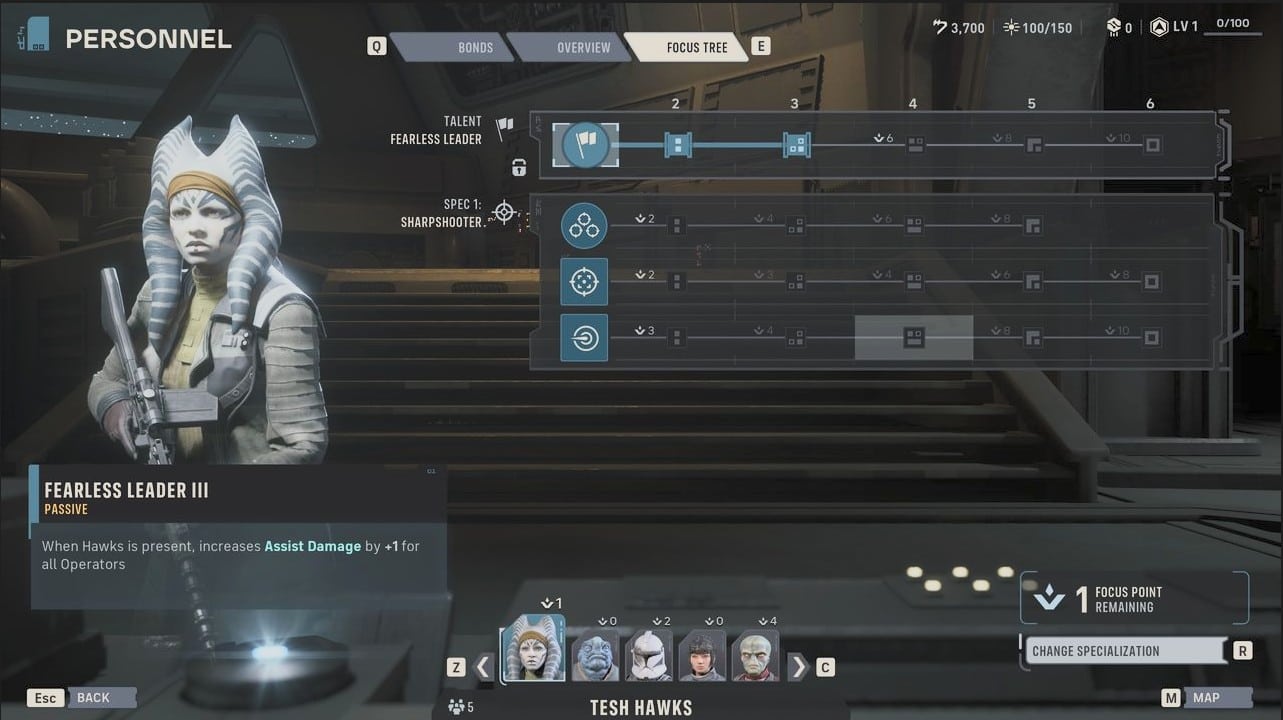
Focus Point Respec
Class Specialization can be changed at the Den from Cycle 3. Changing class is free and refunds the Focus spent in that Specialization, which lets you rebuild after early experiments. Authored-character Talent investment is not refunded.
Later in the campaign, operators also unlock a Second Specialization, which widens the Focus Tree rather than replacing the first class.
- Interact with the Personnel console beside the Holotable.
- Open the Focus Tree tab.
- Select Change Specialization in the lower-right corner.
- Choose the new Specialization and reassign the refunded Focus Points.
Changing class refunds the points spent in that Specialization. Focus invested in an authored character’s fixed Talent stays in the Talent, since the respec does not replace it.
Unique Specializations such as Jedi Padawan and Astromech remain locked to their valid operators. Cly’s Mandalorian identity is also exotic: Combat Jump persists through a class respec.
7. Every Very High Bond Trophy Pairing
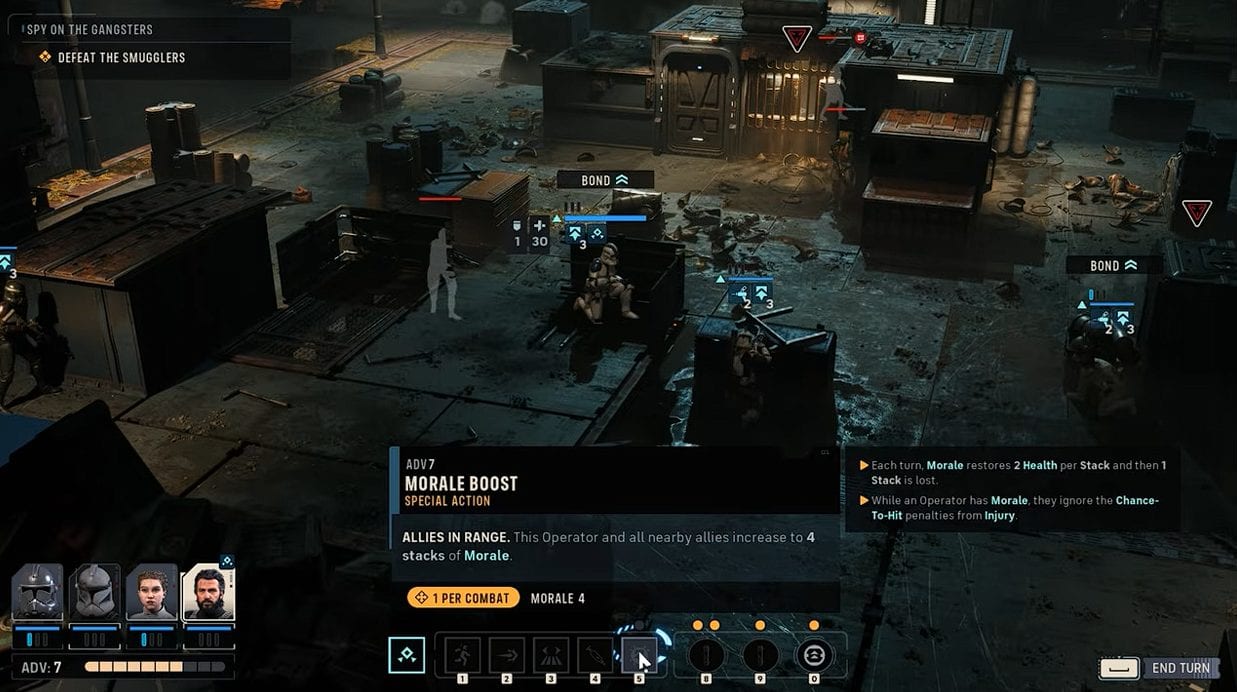
Morale Boost
Star Wars Zero Company has 10 Bond trophies. Six require Hawks and an authored companion, two use fixed companion pairings, and the last two prove that Custom Operators and Astromechs participate in the full Bond system.
| Trophy | Very High Bond Pair |
|---|---|
| Old Friends | Hawks and Trick |
| Sharp Shooters | Hawks and Luco |
| Mate and Marrow | Hawks and Kabb |
| Class and Distinction | Hawks and Jae |
| Word Of Honor | Hawks and Cly |
| Lost Causes | Hawks and Tel |
| Heroes on Both Sides | Trick and Luco |
| The Baroness and the Boxer | Kabb and Jae |
| Thick As Thieves | Two Custom Operators |
| Beep Boop | Two Astromechs |
Start with the two non-Hawks authored pairs because each mission advances two fixed trophy requirements without occupying Hawks. After Trick and Luco or Kabb and Jae reach Very High, place Hawks beside one authored companion and rotate that companion only after the trophy unlocks.
Recruit two Custom Operators early for Thick As Thieves. Beep Boop requires two Astromechs, so unlock Astromech recruitment through the Den’s Droid Bay and keep both droids in the same mission squad. Backup works between Astromechs in the same way it does for organic operators.
8. Bond Progress and Companion Story Trophies

Talking to Cly
Six additional trophies are tied to completing the personal stories of Trick, Luco, Kabb, Jae, Cly, and Tel. These are story trophies, not rewards for reaching Very High Bond, so complete each operator’s conversations, Operations, and personal missions as they become available.
- The Trooper: Complete Trick’s story.
- The Umbaran: Complete Luco’s story.
- The Prizefighter: Complete Kabb’s story.
- The Baroness: Complete Jae’s story.
- The Mandalorian: Complete Cly’s story.
- The Padawan: Complete Tel’s story.
Check the Den after every mission and resolve companion content before starting the next Tactical Mission. Available missions and Operations can expire when the Cycle advances.
The efficient campaign plan is simple: build one reliable pair, use Backup every turn, claim Cross Training immediately, and spend Focus on the abilities that define each operator’s job.
Rotate pairs only after reaching the desired Bond reward or trophy, and keep authored companion content ahead of the campaign clock.


